
&
NEWS
Solinst Canada Releases Deep Water Discrete Interval Sampler
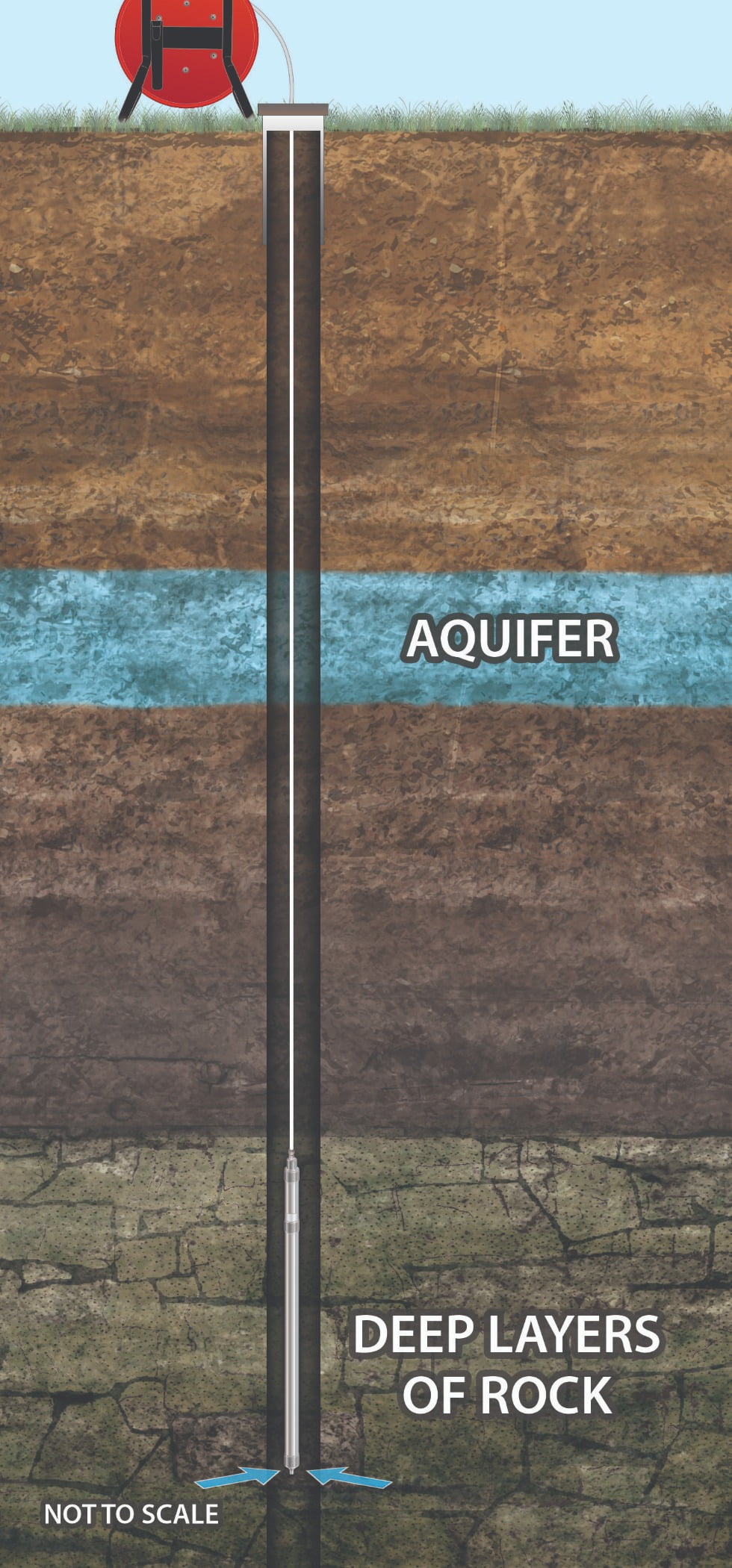
Solinst Canada Ltd. has released its Model 425-D Deep Sampling Discrete Internal Sampler, designed for sampling groundwater or open water bodies from submerged depths as much as 4,000 feet (1,200 meters).
In a release, the company says discrete interval sampling is “ideal for obtaining truly representative water samples and for obtaining samples of product (LNAPL and DNAPL). It is ideal for groundwater sampling from below an oil/product layer on the surface of the water.”
The method can profile open bodies of water, open boreholes and screened wells, and collect samples from distinct levels or points of inflow. Mixing of water from different levels is minimized.
“No-purge” samplers like the Model 425-D Discrete Interval Sampler, Solinst says, have gained acceptance by many regulatory agencies worldwide for obtaining high quality groundwater samples.
The Model 425-D is a stainless steel sampler with LDPE tubing mounted on a convenient reel, which features a pressure attachment for a high-pressure hand pump, and a pressure/vent switch regulate pressure on the sampler.
Operators connect weights to the top of the sampler before lowering, to overcome buoyancy. At depth, the sampler is pressurized. The pressure acts on the top of a piston inside the sampler, overcoming the hydrostatic pressure acting on the bottom of the piston to allow sample water to enter. After the sample is collected, the pressure is released, allowing the piston to reseal at the bottom of the sampler. The sealed sampler is then retrieved to surface, maintaining chemical stability of the sample.
Solinst also offers the standard Model 425 Discrete Interval Sampler in 1-, 1.66- and 2-inch diameters. It is designed for sampling from submerged depths as much as 300 feet (90 meters).
For more information about the new Model 425-D Deep Sampling Discrete Interval Sampler, visit the company's website.
Solinst Canada Ltd. has served clients in the groundwater and surface monitoring sectors for more than 35 years. The company offers a range of loggers, peristaltic pumps, samplers and other equipment for hydrogeologists, hydrologists and other water professionals. For more information, visit www.solinst.com.
Solinst says “no-purge” samplers have gained acceptance among regulators worldwide. Source: Solinst
Goulds Water Technology Release New Residential VFD System
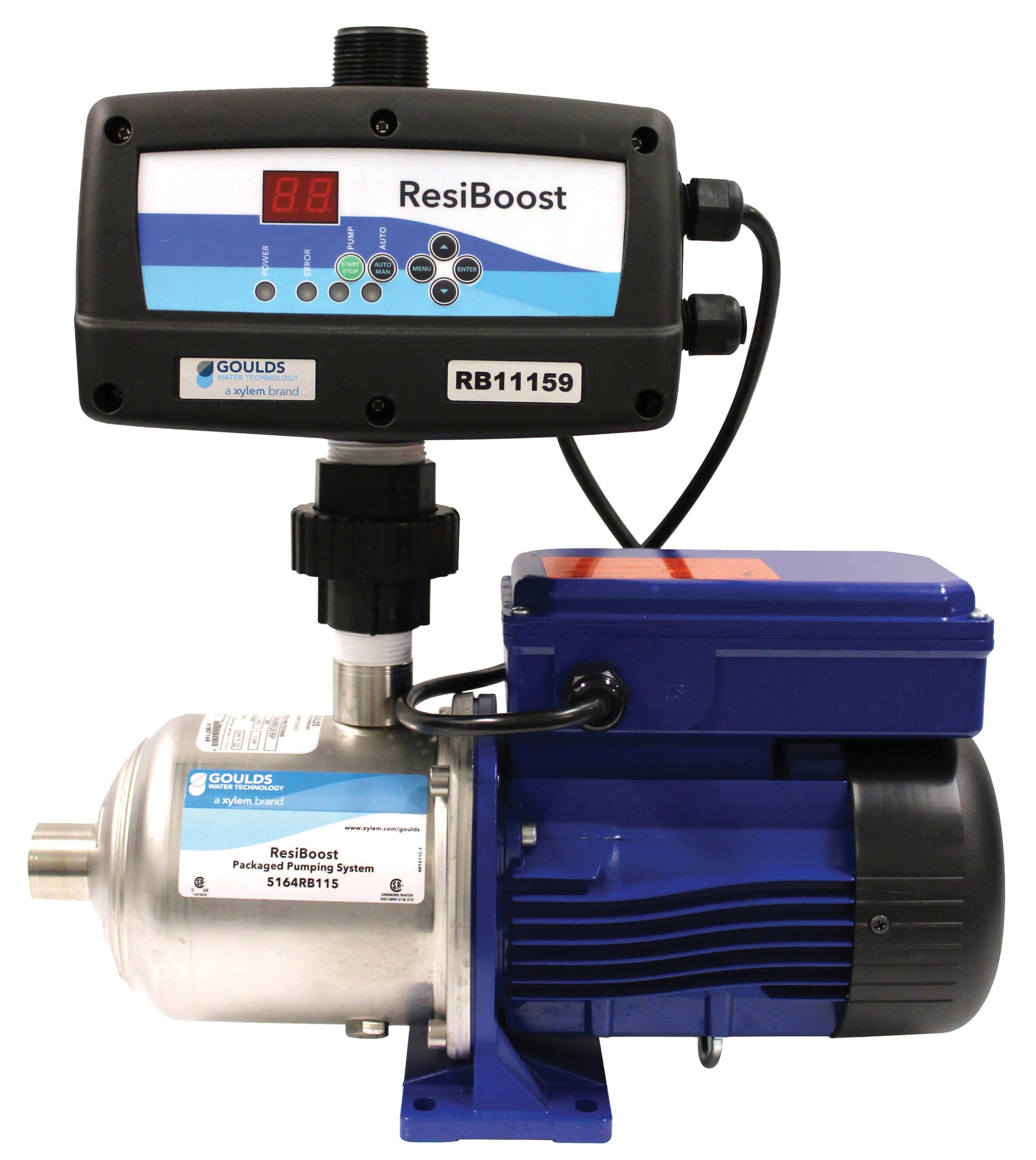
Goulds Water Technology, a Xylem brand, announced the release of its new ResiBoost Complete Packaged Variable Frequency System, which it calls a “next-generation engineered design.” The package includes a variable frequency controller, a multistage stainless-steel pump and tank. The ResiBoost, Goulds says, maintains and automatically adjusts water pressure throughout the home when multiple water sources are used simultaneously.
“People are spending more time at home than ever and placing increased demands on their home’s water systems,” says Jill Boudreau, Xylem Residential Water Product Manager, Americas. “The ResiBoost ensures reliable and consistent pressure throughout the house at any time while optimizing energy usage.”
Caption: The company says the new ResiBoost package can help homes maintain consistent, strong pressure, even amid high residential demand. Source: Goulds Water Technology
The ResiBoost provides consistent water pressure in municipal systems and can also help to re-pressurize water in a well system.
Goulds says the ResiBoost motor, pump and controller come preassembled and preprogrammed, with the tank installed separately, to simplify and speed installation. The company says the ResiBoost gives strong, consistent water pressure, despite its compact size. That size, though, allows installation in small or easily hidden areas. The system, Goulds says, has a quieter design than competing pump systems and is proven through extensive testing to have low serviceability and long-lasting performance.
The ResiBoost is available in six models that have different ranges of maximum psi, maximum flow, stages, output phases and voltages, horsepower and weight. Depending on the model, the output voltage is either 115 or 230 volts. Horsepower ranges from ¾ to 2, with a maximum psi ranging from 40 to 68.
For more information on the ResiBoost, visit the Goulds Water Technology website.
Xylem, based in Rye Brook, N.Y., serves the public utility, residential, commercial and agricultural markets with a variety of pump and water treatment products. The company has more than 16,000 employees worldwide. For more information, visit www.xylem.com.
Registration Open for DFI’s S3: Slopes, Slides and Stabilization Conference
Registration has opened for the Deep Foundations Institute’s S3: Slopes, Slides and Stabilization Conference, planned for Aug. 3-5 at the Hotel Kabuki in San Francisco.
In a release, the DFI says the event is led by the group’s Deep Foundations for Landslides/Slope Stabilization Committee and the DFI-ADSC Anchored Earth Retention Committee, with contributions from seven additional DFI committees that support the subject matter. The two-and-a-half-day conference focuses on effective application of deep foundations, ground improvement, and soil mixing for stabilization of slopes and excavation support. Roberto Lopez, PE, chief engineer of Malcolm Drilling Company, serves as conference chair.
Invited speakers and experts will discuss the latest analytical and design methods, as well as practical applications. The event will highlight California case histories, with an emphasis on deep mixing and ground improvement techniques. In addition, three on-demand presentations are available to attendees.
This event features three invited speakers:
Ross Boulanger, Ph.D., PE, University of California–Davis, will overview seismic research efforts with a focus on current initiatives.
Rob Jameson, Malcolm Drilling Company, will review the last decade of deep mixing practices in San Francisco.
Mark Rice, Esq., McNeil Silveria Rice & Wiley, will address the legal and forensic considerations relative to landslides, causation and forensic analytics, as well as how post-slide investigations and legal resolutions can occur, with these steps often faltering due to inadequate initial investigations and “crime scene” capture.
The conference also features a 90-minute panel discussion and live webinar on appropriate modeling of groundwater in slope stability analyses. Erik Loehr, Ph.D., PE, of the University of Missouri–Columbia facilitates. Loehr serves as the trustee liaison for DFI’s Deep Foundations for Landslides/Slope Stabilization Committee. The webinar features providers of commonly used software packages discussing, analyzing and presenting solutions to the same real-world slope stabilization problem, and highlighting the influence of groundwater variations on the solutions.
The event includes an exhibit area where up to 30 DFI member companies have opportunities to showcase products and services.
Register at www.dfi.org/S3-2021.
The DFI is an international association of contractors, engineers, academics and suppliers in the deep foundations industry with more than 3,500 members worldwide. For more information about the Deep Foundations Institute, visit www.dfi.org.
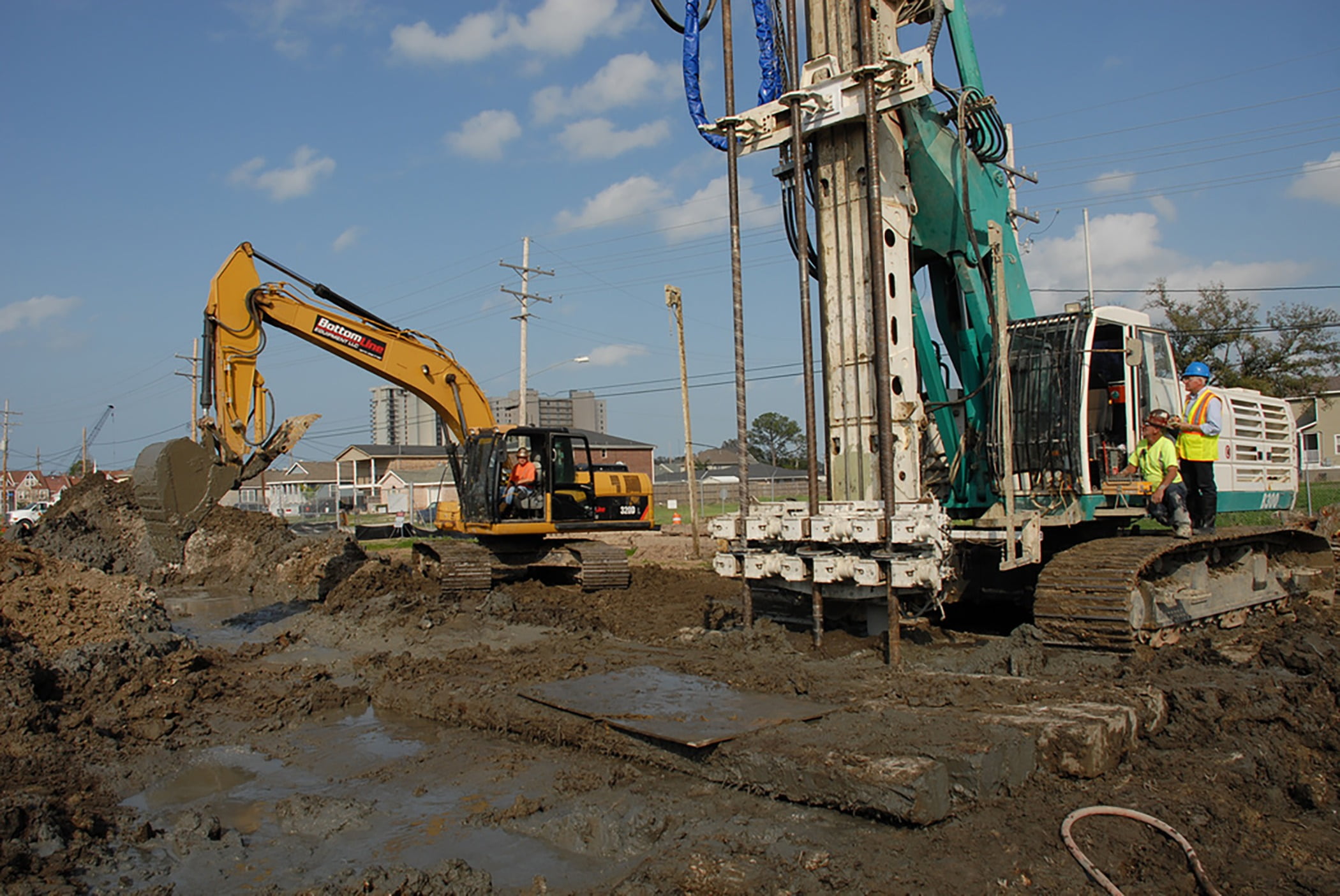
Caption: The Deep Foundations Institute’s S3: Slopes, Slides and Stabilization Conference will feature the latest in analysis and methods. Source: USACE / Public Domain
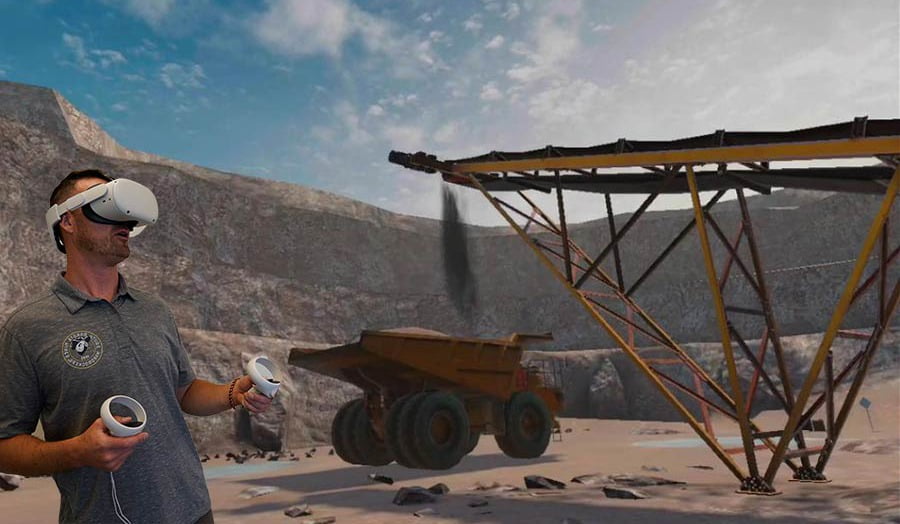
South Dakota Mines Team Develops Virtual Reality Training
“We are using new technologies combined with neuroscience to help people learn faster and more effectively,” says Clint Kling, a mining engineering doctoral graduate student currently working on the project under the guidance of Associate Professor Purushotham Tukkaraja, Ph.D.
The work is in collaboration with a company called Motive.io, with research funded by a $100,000 grant from the United States Department of Labor, Mine Safety and Health Administration (MSHA). The project aims to improve safety hazard instruction.
The VR hazard awareness training was designed for new and inexperienced miners, and will be available in English or Spanish. It will be conducted alongside the already existing MSHA training program at South Dakota Mines, the local mine sites, and will also be used in MSHA’s refresher training courses. The team plans to develop this program at the local level to establish good results before a national rollout.
Researchers plan to take their ideas to the marketplace, and remain open to collaboration with partners in mining, construction or general industry interested in developing a new VR safety training program designed for their needs.
“There is much thought in the background detail that goes into every move and interaction in the environment to give the end-user the most effective and beneficial training,” Kling says.
“A successful VR training module is in the creation of its storyboard,” Tukkaraja adds. “We are pleased that MSHA gave us the opportunity to develop our idea to help make the mining world a better and safer place to work.”
The team saw traditional mining workplace safety as an overly complex subject difficult to convey in a classroom or even on-the-job setting due to the potential dangers involved. The VR training aims to simplify the topic. Allowing people to train in a risk-free environment, the team says, improves safety training outcomes by creating more conscious workers.
“Having trained in VR ensures the person's safety but also shows them the potential hazards of a mining environment. We see the benefits of VR for safety training and the future of it as well. Our goal is to develop a lasting training program using VR because of its proven effectiveness,” Tukkaraja says.
South Dakota Mines, founded in 1885, is a leading engineering, science and technology university based in Rapid City, S.D. It offers bachelor’s, master’s and doctoral degrees in a range of mining and geology-related disciplines. For more information, visit www.sdsmt.edu.
Caption: Clint Kling, a doctoral graduate student in the Department of Mining Engineering and Management at South Dakota Mines, tests a virtual reality training system he helped develop to improve safety in industrial settings. Source: South Dakota Mines
A team at Rapid City, South Dakota-based South Dakota Mines has developed a virtual relative (VR) training module that mimics a mining environment.